
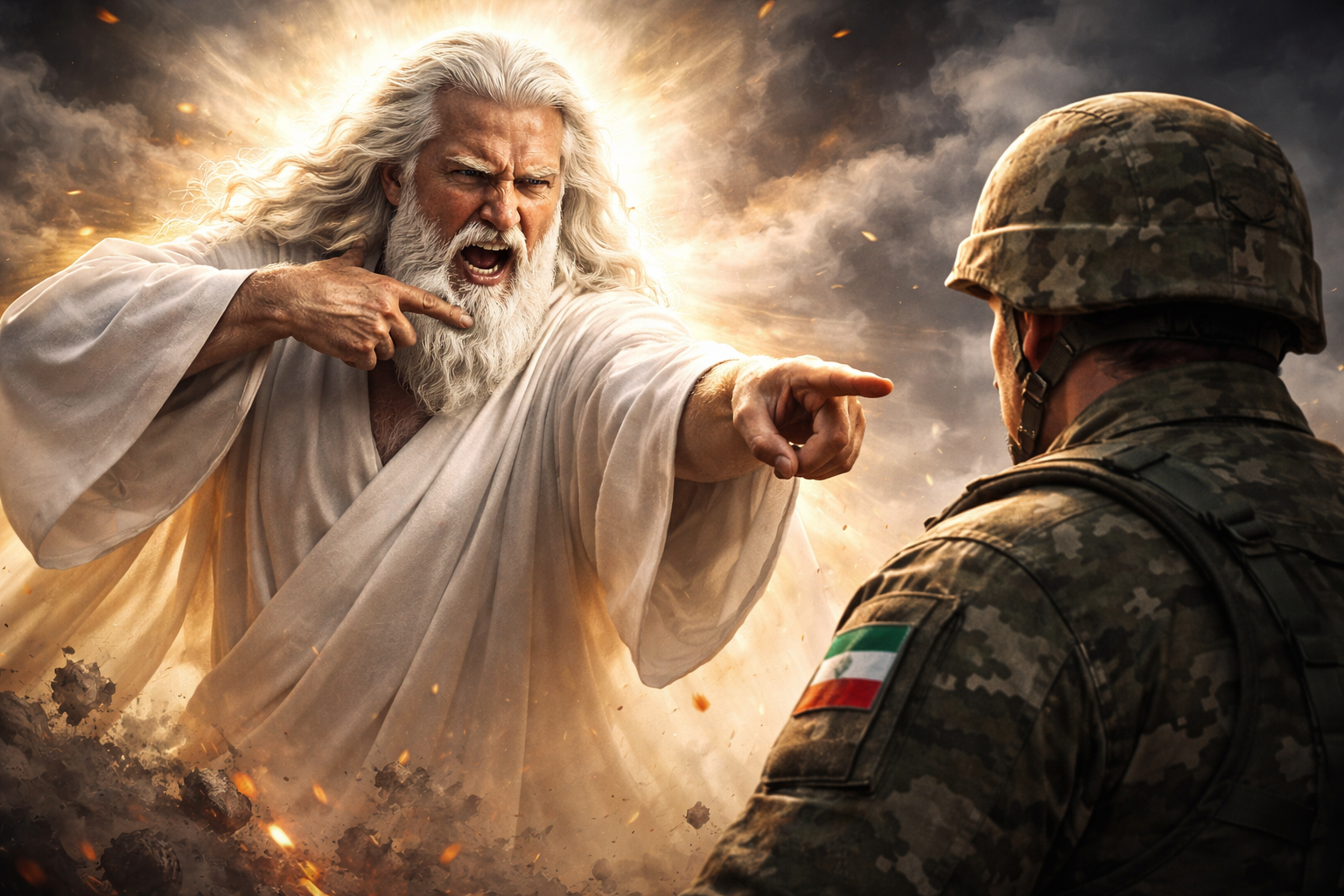
There’s been a strange—if predictable—fusion of religion and war rhetoric coming out of Washington lately. And before anyone says, “this is just critics exaggerating,” it’s worth starting with what’s actually been said.
Here are two examples from Pete Hegseth in recent weeks. At a Pentagon worship service during the war with Iran, Hegseth prayed for:
“overwhelming violence of action… against those who deserve no mercy.”
That’s not metaphor. That’s not subtle. That’s a direct appeal to God for violence.
This is not coming out of nowhere.
This Starts to Sound Familiar… In the Wrong Way
Now, if you’re even vaguely familiar with Christianity, especially the teachings of Jesus, this should sound… off.
Because the most famous summary of Jesus’s ethical teaching—the Beatitudes—goes something like this:
- Blessed are the meek
- Blessed are the merciful
- Blessed are the peacemakers
It’s a vision centered on humility, restraint, and compassion.
But if you listen to some of the rhetoric surrounding war right now, you’d think Jesus said something very different.
The Beatitudes, Rewritten for Power Politics
Let me try a version that seems closer to what we’re hearing:
Blessed are the violent, for they will take what they want.
Blessed are those who show no mercy, for they will never be weak.
Blessed are the feared, for no one will dare oppose them.
Blessed are the destroyers of their enemies, for they will be secure.
Blessed are those who win, for they will decide what is right.
Blessed are the strong, for they will inherit everything.
That’s not biblical Christianity. That’s power politics dressed up in religious language.
This is not to say that Jesus was always nonviolent. He wasn’t. But he generally preached nonviolence, and a literal reading of the New Testament is largely advocacy for nonviolence.
(Of course, it’s scripture. So, people will find in it what they want. But, still…)
This Isn’t New—But It’s Still Dangerous
To be fair, this tension isn’t new. Religious language has been used to justify violence for centuries. Wars have been framed as righteous. Enemies have been cast as evil. Gods have been invoked to bless armies more times than anyone can count. But there’s always been a tension between the teachings of Jesus and the realities of political power.
And when that tension disappears—when religious language is used to simply sanctify violence—something important is lost.
What’s Actually Going On
Let’s be clear about what’s happening here. This isn’t really about theology. It’s about legitimacy.
Religious language does something powerful. It turns political decisions into moral imperatives. It frames conflicts as good vs. evil. It discourages doubt and complexity.
If a god is on your side, then you’re not just right. You’re righteous!
And if your enemies are opposed to your god, then they’re not just wrong. They’re deserving of destruction!
That’s a very useful way to talk about war. It’s also a very dangerous one.
The Pushback Matters
It’s worth noting that not everyone in the religious world is on board with this. The current Pope has pushed back explicitly, warning that:
God does not listen to those who wage war and have “hands full of blood.”
Granted, as an atheist, I don’t believe in any gods and don’t think even the Pope could know what a god does or does not want. But it is nice to see someone push back against those who would try to wrap their violence in the will of a deity.
I’m always fascinated by those who engage in violence – like UFC fighters or NFL football players – and then thank their god for his/her/their help in the violence they just engaged in on their opponents. As we’ve long known, people construct their gods in ways that agree with their current values. What does that mean? The individuals doing this genuinely think that their deities are pro-violence. Which reveals exactly what god language does: justify our own values.
The Bottom Line
You can believe in a god. You can support military action. You can even try to reconcile the two. But at some point, it would be nice if someone forced you to acknowledge what you’re doing.
There’s a difference between wrestling with moral complexity and declaring that your god wants you to kill your enemies. The first is difficult. The second is easy.
And when the second starts to sound more like the dominant message, it’s worth asking a simple question: Are we still talking about religion?
Or are we just using it to justify what we already wanted to do anyway?